
This article was originally published on NBR publications.
ANALYSIS: White labelling is a global phenomenon, but are there winners and losers?
The white-labelled Anko brand now delivers about 85% of Kmart’s revenues in Australasia.
Shoeshine needed to stock up on some utilitarian summer attire a few months ago, so took himself off to Kmart in search of shorts and T-shirts.
Fossicking around in the store was something of a revelation. Just about everything on sale there, from clothing through to crockery and even kitchen appliances, was branded as ‘Anko’.
While the Anko brand is clearly known to hundreds of thousands of Kmart customers, it was a new one on the retail-averse Shoeshine and – curiosity piqued – he started investigating.
This was when he saw that shirts already in his wardrobe and purchased several years ago by his partner also sported the Anko brand.
Shoeshine had been wearing Anko and hadn’t even noticed!
Anko, he soon learned, is a general merchandise brand that was introduced in Australia and New Zealand in 2019 and consolidated a wide range of private label products under the same brand.
Today, it is considered one of the key reasons for Kmart’s success in Australia and now accounts for about 85% of its sales in Australasia. The idea is consistency, quality, and value for money.
Getting ‘Ankorated’
Young people have even incorporated it into their slang, according to Shoeshine’s 20-something children.
Homes that have been furnished and equipped with Anko products are now said to be ‘Ankorated’ not decorated.
It is also being exported. Anko is opening its first store in the Philippines this year and is also finding its way into the Canadian city of Vancouver. By the end of the year, Anko will be in stores from the west to the east coast of Canada, where it has a key role in a strategy to revive a famous but failed retail chain called Zellers.
The revelations on Anko prompted Shoeshine to think about the whole world of private label retailing, and this was reinforced by a news story earlier this month.
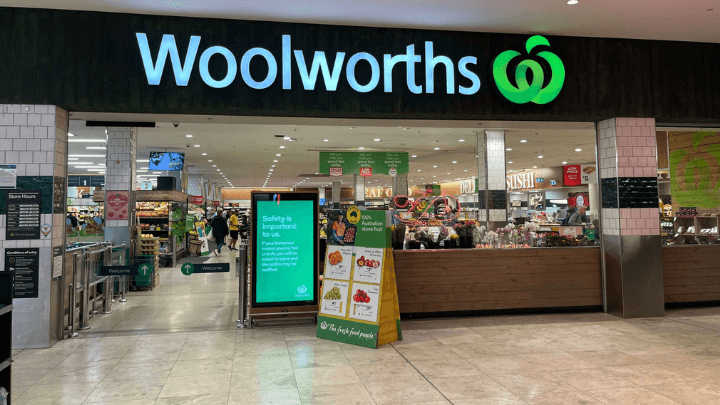
Grocery giant Woolworths had applied to the Commerce Commission for approval to acquire ready meals producer Beak & Johnston, which is also active in Australia and where a similar application is up before the ACCC.
This deal, we were told, has no impact on competition because Woolworths is a retailer and Beak & Johnston is a manufacturer.
On the face of it, Shoeshine wonders about the impact of vertical integration of these two businesses on competition.
Surely a deal like that makes Woolworths stronger and more competitive both against other retailers and ready meal manufacturers? But more on that later.
Looking after your ‘children’
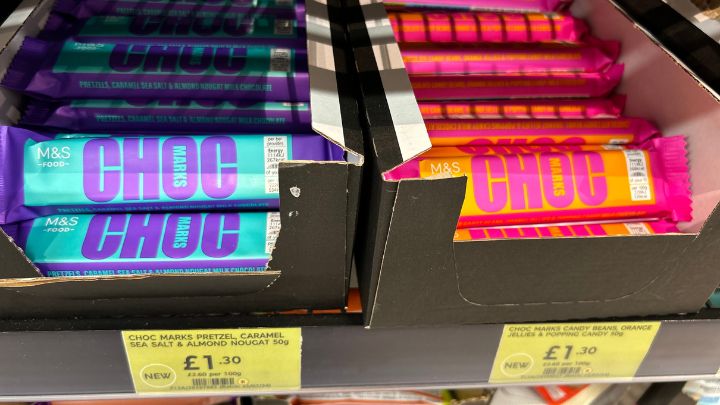
A decade or so ago, private label meant something different for consumers. There was the Black & Gold range and No Frills and Homebrand products, which screamed budget buying and made few, if any, claims on quality.
In a classic stereotype, young people living in share houses would exist on Black & Gold or No Frills’ two-minute noodles.
(A younger Shoeshine explored the idea of creating a beer brand in generic colours called simply ‘Piss’.)
Today, this budget and generic approach has gone upmarket in a wave of private labelling that is one of the main trends in global retailing.
Supply chain efficiency
It is also a supply chain efficiency story.
Kmart is a manufacturer of some Anko products, where it is able to fully control the production process and manage its costs and margins.
This knowledge has enabled it to better manage the contractors who also supply Anko-branded product.
Prof Consulting Group principal Mark Field is a seven-year veteran of Australian grocery giant Coles, where he headed the Coles brand.
In the company’s most recent financial results, while total sales revenue was up by 2.9%, revenue from Coles own brands increased by 8.6% and its top-of-the-range Coles Finest brand by 20.4%. So, it’s clearly a major growth area.
Field’s message is that private labels have developed through a more sophisticated and streamlined approach to the retail supply chain, and ultimately also deliver better value to consumers and opportunities to participating suppliers.
“We always used to talk about the private label as being a part of the neighbourhood,” says Field. “So the private label would be my children, and the brands would be my neighbours’ children. You always want your neighbours’ children to do well, but you want your own children to do slightly better.”
Field says that in some cases premium private label products are the main reason consumers visit a store.
They are the ‘draw’ that gets them in and, once there, they purchase branded products that are available elsewhere.
His other point is that private labelling is also thriving as a result of retailer commitments to responsible sourcing. With private labels, retailers are better able to control the process and the ingredients to make sure they are compliant with the commitments they have made.
Supplier opportunity
When it comes to suppliers, Field says private labels are a major opportunity and there are many suppliers “who can see the role private label in their business and how it can help them become stronger.”
“There are some great examples of farmers who have said, ‘I want to put my broccoli into Coles or Woolworths’ and want to be the poster boy for Australian fresh-grown produce,” he says.
“They’ve done incredibly well off the back of it, and had access to far more volume than they would have had if they were trading through the traditional channel.
“So, private label is important to retailers strategically, but it is also strategic and creates opportunities for those manufacturers who want to supply those products.”
Long-term relationships between retailers and suppliers, built around private labels, drive greater efficiency through the supply chain and enable product “to move around the country quicker, making sure it is where it needs to be”.
Field says: “Retail has undergone significant transformation and the supply chain is more capable than it has ever been and private labelling has driven investment in the supply chain, whether it is in storage or distribution, but it does help deliver economies of scale.”
New Zealand food businesses, he says, have a big opportunity to sell into private labelling in Australia because of the high level of confidence and trust Australians have in Kiwi food.
Pams is one of NZ’s favourite brands, says owner Foodstuffs.
This could go some way to addressing the cost challenges that beset New Zealand producers.
Another trend is for the private labels to span different price points, from value through to premium, and for retailers – with Kmart the exception – to use multiple brands for their white labels depending on the product category, rather than one overarching brand for them all.
One of Shoeshine’s colleagues counted up about 30 private label brands on offer at The Warehouse.
Foodstuffs claimed in a 2021 submission to the Commerce Commission that its Pams brand is the “most popular grocery brand in the country” and Woolworths has stated it has more than 3000 white-labelled products across 250 categories.
These may not obviously present as in-house private labels when the consumer picks them up, but the brand has resonance with the consumer in its own right.
“It’s about having something that’s fit for purpose across the tiers,” says Field.
“You have Macro for Woolworths, or Coles Finest, and what you are seeing is products that are slightly different to the competing brands that have a different story or provenance behind them.
“They might appeal to someone who is a bit of a foodie who wants to spend more time eating at home because they are eating out less in the current environment.”
What about competition?
Field’s view is that private labelling is a win for all stakeholders – retailers, suppliers, and consumers – but that is not always shared.
Consumer NZ, for example, published some comments in the wake of the Commerce Commission application by Woolworths to acquire Beak & Johnston.
“We think there is the potential for competition to be reduced if a supermarket owns a manufacturer,” the Consumer NZ report said.
“It could mean other retailers won’t have access to those products or, if they do, they won’t be offered the products at competitive prices.
“We’re concerned about the growing number of supermarket brand products available on grocery shelves. While they are generally cheaper, there’s a risk they could come to dominate supermarket shelves and push out competitors, reducing choice and raising prices in the long run.”
Consumer NZ’s point – and it also quotes the Commerce Commission’s First Annual Grocery report from September 2024 – is that private labelling means the supermarket is both a customer and a competitor of independent suppliers, and that this has the potential to lessen competition.
Shoeshine admits this may have also been his view before embarking on this column but now he is not so sure, and wonders if that is just a knee-jerk reaction that goes back to the No Frills days.
Over here in Australia, Shoeshine has been tuning in regularly to the Parliamentary and ACCC inquiries into supermarket competition and, while price gouging has been top of the agenda, hardly anyone has mentioned private labelling.
Consultant Field points out that, in the case of Beak & Johnston, the company is likely to continue producing its own branded meals in addition to those white labelled by Woolworths.
Put that to one side, given the fact that Woolworths will own the company, but other suppliers – which remain independently owned – satisfy white labelling contracts to retailers and still produce under their own brands, which are sold widely.
White labelling is clearly an unstoppable global phenomena that is only going to gain more momentum if and when online giant Amazon gets more involved.
The company is starting at the budget end of the market in the US, with its Amazon Saver label to take on Target and Walmart.
Field’s view is that we shouldn’t be afraid of these developments.
“I think that investment in the market drives competition and that drives change and I think that is ultimately good for the businesses because they become more efficient,” he says.
“I also think that is good for the brands because they have more opportunities to send product into channels customers are looking for, and that is also good for consumers.”
Something to ponder as we cruise the supermarket aisles and fill our trolleys.
Are we being ripped off, or are we – like the retailers – sharing in the benefits of a better supply chain?